Holistic Methods to Addiction Treatment in Texas
Recovery is seldom a straight line, and in a state as big and differed as Texas, one-size-fits-all care falls short. A holistic method meets people where they are, mixes medical and psychological care with useful life supports, and accounts for culture, family, and community. For many years, working with customers from San Antonio to the Panhandle, I have discovered that the most sustainable gains come when therapy sees the whole individual, not only the diagnosis.
Why a holistic lens makes good sense for Texas
Texas contains plethoras. Army areas sit alongside university communities, oilfield camps, and country regions that can take hours to go across. A young solution participant stationed near Joint Base San Antonio deals with a different set of stress factors than a breeder in capital Country or a technology employee in Austin. Job schedules differ hugely, from change job to long jobs far from home. Faith and family typically play main functions. These facts ought to shape addiction treatment.
The state's geography includes another layer. Individuals in metropolitan cores can access a variety of services, yet many still deal with waitlists or slim insurance policy networks. In the boundary area and West Texas, behavior wellness company shortages make distance an obstacle. Telehealth helps, yet not every household has steady broadband. Programs that do well in Texas usually weave together in-person care, digital choices, and community sources so support does not vanish the minute a person leaves a clinic.
Holistic treatment is not a luxury add-on. It is a sensible method to attend to the root chauffeurs important usage while building sturdy abilities and supports. It identifies that sobriety without function, connection, or mental security rarely holds.
What "holistic" actually suggests in practice
Holistic does not suggest unscientific or anti-medication. The clinical structure remains vital, especially during withdrawal or for those with co-occurring problems. The broader framework asks: What else does this person demand to stabilize and grow? Treatment strategies then fold up in evidence-based treatment, household dynamics, sleep and nutrition, stress law, peer community, spiritual or cultural anchors, and concrete analytic around work, child care, transportation, and housing.
I commonly describe holistic care as building a latticework. Medicine and treatment develop the primary structure. Family, neighborhood, significant activity, and health and wellness practices are the crossbeams. No single light beam lugs the full tons, however together they develop stamina and flexibility.
The clinical foundation: detox, stabilization, and medications
Acute withdrawal monitoring can be lifesaving. In Texas, clinical detoxification is offered across hospital settings, dedicated detoxification units, and some property programs. The choice relies on substances entailed, medical history, and safety and security at home. Alcohol and benzodiazepine withdrawal need close surveillance as a result of seizure danger. Opioid withdrawal is seldom serious but can be ruthless without support.
Medication for Addiction Treatment, frequently called floor covering or MOUD for opioid usage condition, is central to numerous alternative strategies. Buprenorphine and methadone minimize yearnings and support brain chemistry. Extended-release naltrexone can aid in the right context. For alcohol usage disorder, naltrexone, acamprosate, and disulfiram each have a role. The choice is individualized. I have customers who needed daily methadone for framework and others that did finest with buprenorphine prescribed via a San Antonio facility that collaborated telehealth follow-ups to work around military obligation hours.
A cautionary note: access differs. In some rural counties, there may be no methadone clinic within a practical drive. Telehealth recommending enhanced access to buprenorphine throughout the pandemic, and several Texas providers have actually kept digital process, yet in-person gos to might still be required intermittently. The best programs resolve for these logistics early as opposed to letting them derail progress.
Psychotherapy that goes deeper than "simply claim no"
Therapy offers the tools to understand triggers, tolerate discomfort, and modification patterns. Cognitive Behavioral Therapy helps customers discover assumed loops that drive usage. Dialectical Behavior Therapy includes skills for emotion guideline and distress tolerance, indispensable for those that feel hijacked by prompts. Motivational Interviewing values ambivalence and builds inner factors to transform. Trauma-informed care, not as a motto however as a scientific stance, prevents reenacting powerlessness or shame.
One client, a nurse in San Antonio, consumed alcohol to cut through shift-change stress and anxiety and numb the consequences of disorderly nights in the emergency department. For her, CBT was practical, yet development sped up when a specialist introduced EMDR to refine specific incidents that her mind maintained replaying. She did not need abstract conversations about coping. She required to submit those memories into the past so they would certainly not flood the present.
Group treatment adds a peer mirror. Individuals hear their stories in others' words and begin to feel much less defective. The best team issues. Professionals often gain from cohorts that recognize army society and language. Young adults engage better when material is useful and not condescending. In Texas, with its solid confidence areas, numerous clients welcome spiritually incorporated teams. That claimed, inclusivity and consent matter. Spiritual care ought to be readily available, not imposed.
Family systems and the ripple effect
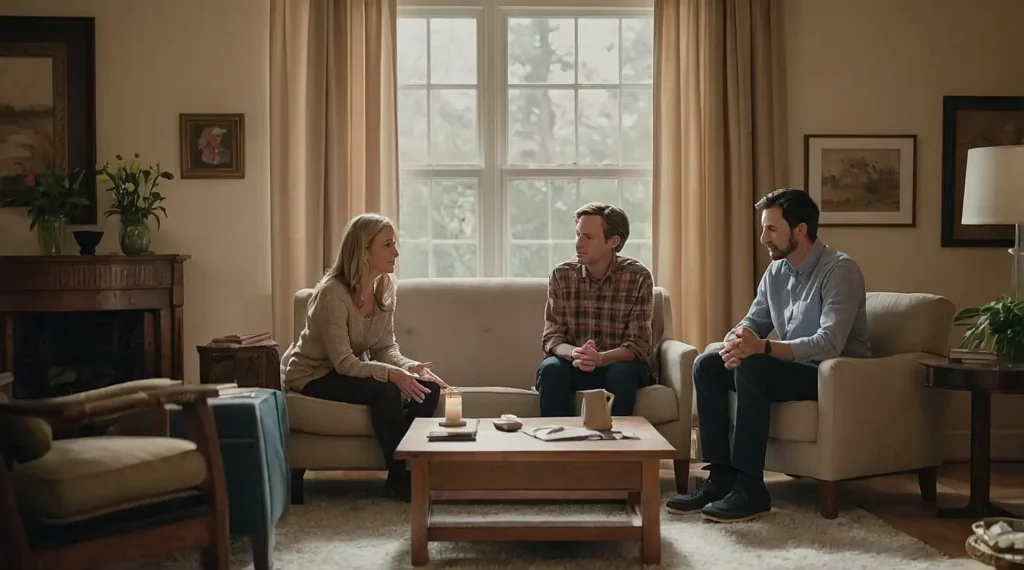
Addiction reorganizes household functions. Someone becomes the fixer, another the avoider, another person the scapegoat. A holistic approach welcomes family members into the procedure to learn boundaries, communication, and self-care. This is not about joining forces against the identified patient. It is about changing patterns so recuperation does not collapse under the weight of old dynamics.
In Bexar County, I usually see multigenerational families where grandparents play a crucial duty in childcare. If a moms and dad remains in early recovery, useful assistance with college pick-ups or going to bed routines can be the distinction between participating in a night IOP session and missing it. Family members conferences, also quick ones, can detail that covers which responsibilities during the very first ninety days. Quality eliminates rubbing and lowers the chance that anxiety comes to be the excuse to use.
Cultural humility: Spanish-language accessibility, faith, and identity
Holistic treatment in Texas values language and society. Spanish-language solutions stay irregular across the state. In San Antonio and the Rio Grande Valley, you can discover multilingual specialists and peer groups more readily than in some country hallways. Programs that just translate handouts however can not supply therapy in a customer's primary language will certainly miss subtlety, particularly around shame, household assumptions, and spirituality.
Faith-based programs can be a lifeline. They provide community, framework, and worths positioning. The moral line is to maintain professional stability and regard client autonomy. A Catholic client might ask for rites. A secular customer may locate meaning in solution tasks or nature. A queer customer should not need to trade safety and security for soberness. Holistic methods alternatives without coercion.
Body-based and way of living foundations
The nerves sits in the body, not just the mind. Recovery maintains faster when sleep, nourishment, movement, and breath job sustain it. This is less about perfect diet plans and even more regarding constant routines.
In very early healing, I coach three anchors: regular sleep windows, protein and complicated carbs at regular dishes, and short activity most days. Sleep secures the prefrontal cortex's capacity to evaluate choices. Protein blunts sugar spikes that can resemble or intensify desires. Motion resets stress chemistry. For some customers, yoga exercise or tai chi constructs interoception, the capacity to see what is occurring within. Others like vigorous strolls while listening to recuperation podcasts. On hot Texas mid-days, a shaded twenty-minute loophole can be the distinction in between uneasyness and relief.
Holistic programs seldom talk about reflection as a magic bullet, and that is the ideal strategy. Mindfulness shows strong results for food craving administration, but only when it is taught in absorbable steps. Five mins a day of breath-focused focus is a decent begin. Many individuals do better with directed sound at first. The point is to learn the ability of pausing prior to acting.
Peer support and neighborhood fabric
Twelve-step meetings, SMART Recuperation, Sanctuary Healing, and nonreligious teams all offer area. In cities, you can sample formats till one fits. In towns, you might discover only a couple of weekly conferences. When I deal with clients in country Texas, we increase minimal regional choices with online conferences and a phone-based pal system. Some programs in San Antonio set new graduates with graduates advisors that still reside in the area, producing liability that lasts.
Recovery housing can offer an essential bridge. Quality varies. Houses with peer-led structure, curfews, and routine medication screening assist lots of people consolidate gains throughout the first 6 to twelve months. Residences that are disorderly or unscrupulous can do damage. It deserves seeing, speaking with present homeowners, and checking whether the home is associated with an acknowledged network.
Special populations: professionals, teenagers, pregnant individuals, and the justice-involved
Texas has one of the largest professional populations in the nation. Addiction treatment in San Antonio frequently converges with military society. Trauma exposure, ethical injury, and post-deployment modification call for clinicians who understand chain-of-command facts and discretion boundaries. Some veterans fear that seeking help will certainly affect their jobs. Programs that clarify what gets on or off the record, which coordinate with VA services when suitable, remove obstacles.
Adolescents need developmentally tuned care. Lectures on consequences rarely work. Family members therapy, institution sychronisation, and tasks that do not feel like penalty make a difference. For a teen in capital Country whose social life revolved around weekend parties, we developed a Friday night routine with a sports league, pizza, and a short check-in phone call with an advisor. It was not extravagant, but the pattern stuck.
Pregnant customers deal with layers of judgment that frequently delay treatment. Evidence supports floor covering in pregnancy for opioid use disorder, with obstetric cooperation and neonatal planning. Holistic programs coordinate prenatal treatment, nutrition, smoking cessation if appropriate, and postpartum assistance. Reproaching does not shield children. Integrated care does.
Justice-involved clients often straddle needs from courts or probation. An alternative strategy lines up clinical objectives with lawful ones. I have actually seen clients sabotage progression as a result of confusion concerning reporting or anxiety of a favorable examination after making use of a suggested drug. Obtaining everyone on the very same page early - judge, probation officer, therapy group, and customer - stops avoidable setbacks.
Addiction treatment in San Antonio: what the neighborhood community offers
San Antonio's community consists of military-focused solutions, multilingual medical professionals, and a solid not-for-profit foundation. Several programs collaborate with medical care centers on the South Side and West Side to incorporate screening and short treatments. I have strolled customers down a corridor for a same-day warm handoff from a family doctor to a behavioral health provider. That immediacy matters.
Residential alternatives variety from short-stay detoxification to longer programs that combine treatment, fitness, and vocational assistance. Intensive outpatient programs commonly run early morning and night tracks to fit service industry routines. Because public transportation can be irregular, reputable ride-sharing coupons or van pick-ups are more than hassle-free, they are equity measures.
Cultural events and faith areas form recuperation rhythms in San Antonio. For some, volunteering at a church food kitchen or signing up with a neighborhood watch supplies function. Others discover area in cycling clubs on the Mission Reach or art classes midtown. A holistic plan plugs clients into the city, not just the clinic.
Rural and border realities
Outside metro areas, choices thin out quickly. In far West Texas, a single therapist may offer numerous areas. The remedy is often a hub-and-spoke setup: initial stablizing in a regional center, then teletherapy plus regular in-person visits. Peer support might imply driving an hour for an once a week group. Gas cards and adaptable organizing can make or damage adherence.
On the boundary, cross-cultural proficiency is non-negotiable. Family members may relocate between countries for work or caregiving. Documents standing impacts comfort with seeking services. Programs that partner with area health employees and faith leaders see greater interaction. Spanish-language care needs to be extensive, not an afterthought.
Payment, insurance, and sensible navigation
Insurance coverage stays a rubbing point. Medicaid in Texas covers particular addiction treatments, however network limitations or service provider availability can slow gain access to. Industrial insurance coverage typically requires preauthorization for property stays or restrictions on number of sessions. A good program appoints an advantages navigator that clarifies options and makes telephone calls with the client. For those paying of pocket, transparent prices and clear timeframes decrease anxiety.
If someone has to select in between shedding a job and entering a thirty-day domestic program, holistic planning might favor extensive outpatient with strong medicine support and nighttime meetings. That choice is not a concession of care; it is an approach to keep housing and earnings secure while developing healing skills.
What to ask when reviewing a program
- How do you integrate medications with treatment, and who handles dosing over time?
- Can you coordinate with my primary care doctor, employer EAP, or probation officer if I consent?
- Do you supply bilingual solutions or culturally certain teams that fit my background?
- What support exists after discharge, including graduates teams or recovery housing connections?
- How will certainly you involve my household or assistance network, and what borders will certainly you aid us set?
Measuring development without perfectionism
Outcomes in addiction treatment are not binary. Abstaining is one https://beckettafyv008.zenbloomer.com/posts/navigating-court-ordered-addiction-treatment-in-texas metric, yet not the just one. Decreased use, less hospitalizations, enhanced work security, recovered connections, and far better psychological wellness all issue. I ask customers to track functional signals: rest quality, number of days with strong cravings, presence at support activities, missed out on responsibilities, and moments of pride. A single slip does not get rid of gains. The feedback to the slip is the information point that anticipates long-term success.
We usage straightforward devices, often as fundamental as a schedule with symbols. Over 3 months you can spot patterns. A customer who consumes after disputes with a brother or sister requires a family session and a conflict plan more than a lecture on willpower.
A practical first ninety days
- Stabilize the body: clinical assessment, laboratory work if suggested, floor covering when suitable, sleep routine, and nutrition basics.
- Build the scaffold: treatment schedule, peer group, enroller or advisor, and two everyday recuperation touch points such as an early morning reading and a night check-in.
- Solve logistics: transport, work notes or FMLA if needed, child care coverage, and device access for telehealth.
- Involve the circle: one household or assistance conference within the first two weeks to set expectations and roles.
- Plan for triggers: a created, rehearsed method for three high-risk scenarios, with contact number and alternatives scripted.
Case notes from the field
A 32-year-old paramedic in San Antonio got in care after a DWI. He urged he could white-knuckle it. Instead of say, we structured a test: two weeks of day-to-day check-ins, sleep targets, and three conferences each week. On day 5, desires spiked after a rough shift. He consented to begin naltrexone. By week 3, he confessed that the medication reduced the edge and that the easy act of packing a protein-heavy lunch lowered his late-night bar quits. 6 months later, he was training brand-new hires and leading an once a week peer group for very first -responders. His healing did not rely on heroics, just an internet of average assistances that held.
A 48-year-old mother in capital Nation fought with pain killer after back surgical treatment. Her spouse concerned she was "changing one medication with another" if she began buprenorphine. We rested with each other, assessed dangers and advantages, and generated her discomfort specialist. She began a low dosage, coupled with physical treatment and a regular mindfulness class. The turning point came when they agreed to lockbox storage space for all managed medications and set up a Saturday early morning walking as a household. The optics moved from fear to shared purpose.
Addiction treatment Texas broad: straightening statewide sources with neighborhood wisdom
Across Texas, the best programs collaborate throughout systems. Medical facilities partner with damage decrease teams to disperse naloxone and link individuals from emergency rooms to same-day buprenorphine starts. Universities embed short treatments in pupil health. Employers acquire into recovery-friendly policies that enable time off for therapy without career penalties. Areas buy psychological health replacements and diversion programs so crises do not immediately become felonies.
The goal is not to duplicate a solitary model almost everywhere. Austin's scene will differ from Lubbock's. What lugs across areas is the concept of assimilation. Medical professionals, peers, households, colleges, churches, and courts can either pull in different directions or straighten around the person. Alternative treatment picks alignment.
Balancing framework with autonomy
People often ask how much structure suffices. Too little, and old habits hurry back in. Way too much, and clients really feel infantilized. The balance depends upon background and existing threat. An individual with duplicated overdoses might need daily observed dosing and limited scheduling at first. Somebody with a solitary episode of hefty alcohol consumption after a separation may do well with once a week treatment, medication, and a peer group. We examine the signal: yearnings, feature, security, and engagement. If those are improving, we hold stable. If not, we dial structure up.

Autonomy expands as skills grow. I have enjoyed clients light up when they recognize they can endure a tough meeting at the office, choose a run, then call a pal, and really feel the urge to utilize pass on its own. That confidence, greater than any type of particular technique, maintains recovery.
The duty of purpose
Sobriety frees time and energy. If that room remains vacant, relapse danger increases. Function can be family members, craft, service, art, belief, or occupation. In San Antonio, I have seen people uncover mariachi, woodworking, trail maintenance, and neighborhood mentoring. Small commitments build up right into identity. You start being a person that turns up. That identification rarely exists side-by-side with chaotic usage for long.
Bringing it together
Holistic addiction treatment weaves medicine, therapy, useful logistics, society, and community right into a meaningful strategy. It values the diversity of Texas, from San Antonio's bilingual areas to the open stretches of West Texas. It measures progression in feature and significance as well as in days sober. It asks families to participate without shedding themselves. It gives medical professionals approval to collaborate treatment as opposed to operate in silos.
If you are choosing treatment, search for programs that can adjust as your requirements change. If you are a clinician, purchase collaborations, not just procedures. If you are a member of the family, care for on your own as well. Recuperation is not a solitary choice, it is a practice. In Texas, with its solid threads of durability and neighborhood, that practice has area to take root and grow.